


Health nudges at work: when the environment encourages movement
21 April 2026 · 2 min read

In 2008, economist Richard Thaler and jurist Cass Sunstein published Nudge, a book that would transform our understanding of human behavior. Their thesis: rather than banning or mandating, we can guide individual choices by subtly modifying their environment. Applied to workplace health, this concept opens fascinating perspectives.
The problem with good intentions
Everyone knows they should move, drink water, take breaks. Knowledge is not the problem. The problem is that we are creatures of habit. When the environment pushes us to stay seated, the best intentions yield to convenience.
The nudge works in reverse. It makes the healthy choice the easiest, most visible, most natural one.
Concrete examples
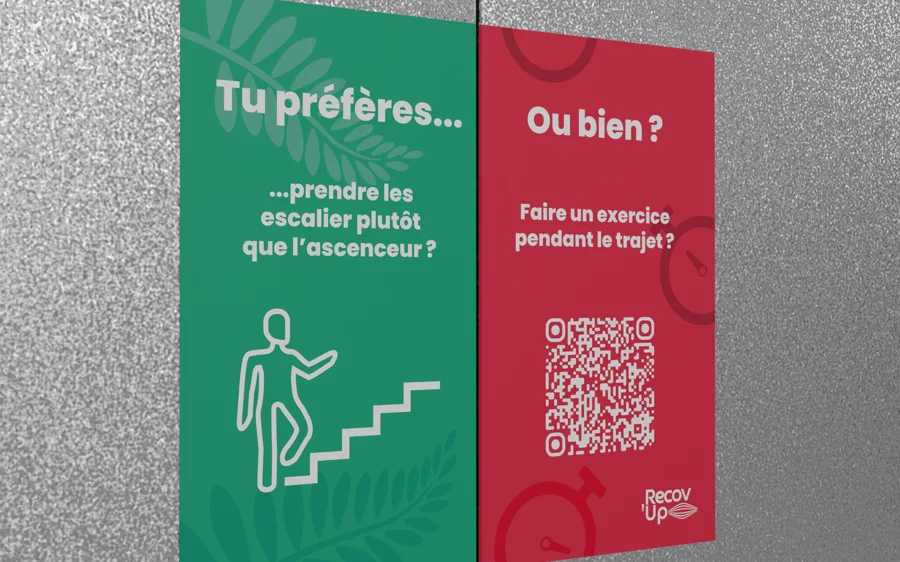
Painting footprints on the floor between elevator and stairs increases stair use by 25-70%. Placing the water fountain away from desks forces standing to drink. Designating standing meeting zones with high tables reduces meeting duration by 34%.
The digital nudge in health apps
MSD prevention apps increasingly integrate these principles. A well-timed notification, a collective challenge, a movement counter that congratulates rather than guilts: these mechanisms rely on behavioral psychology to anchor lasting habits.
Gamification works particularly well when calibrated to encourage regularity rather than performance.
What makes a good nudge
An effective nudge meets three conditions: easy to adopt, attractive, and social. “80% of your colleagues take the stairs” is a powerful nudge. “Take the stairs for your health” is not.