
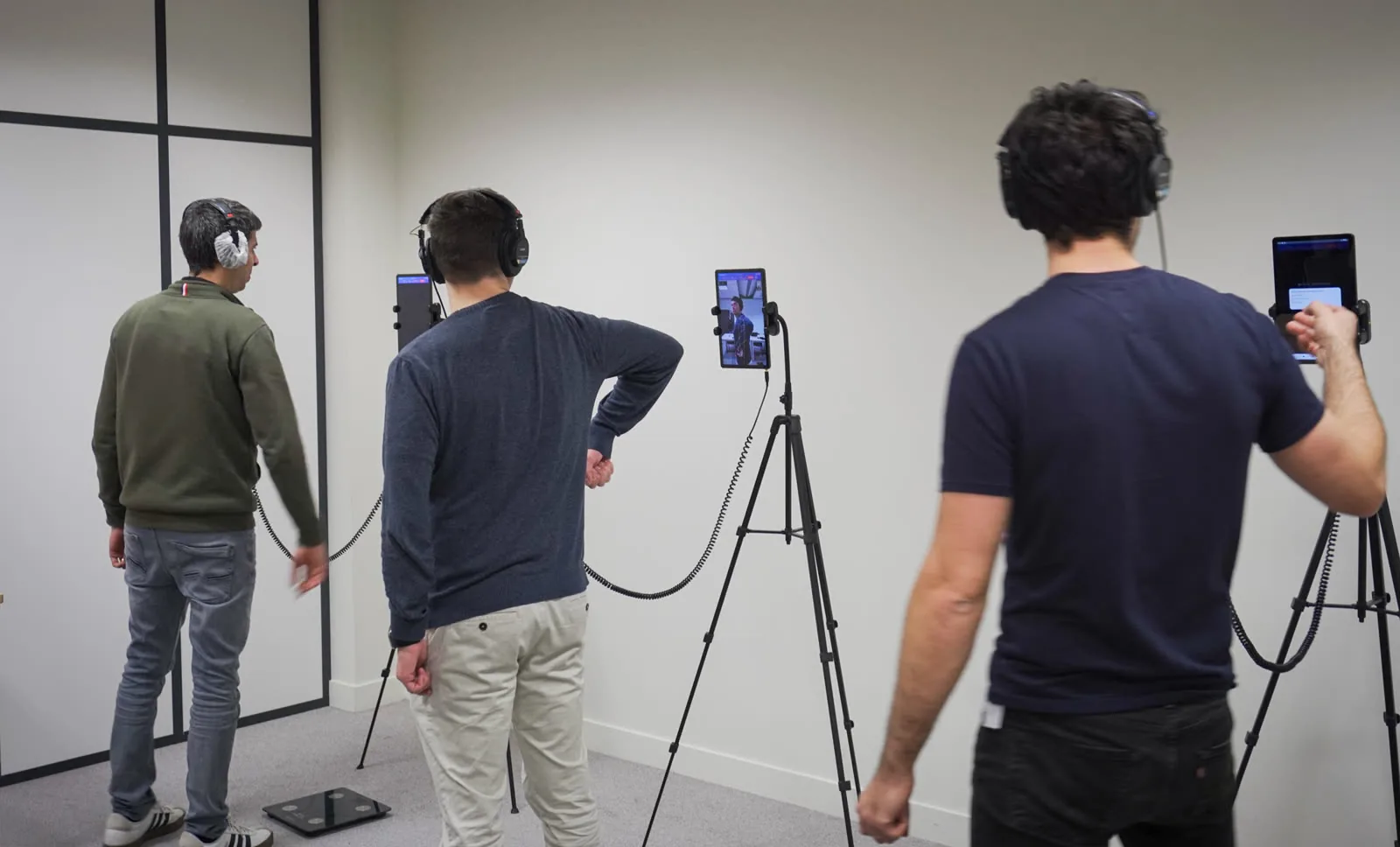







Nearly one in two employees complains of neck pain. Among screen workers, the proportion climbs to 60%. The neck has become, alongside the back and shoulder, one of the three weak points of the body at work.
The head, a weight that changes everything
The human head weighs on average five kilograms. When aligned above the spine, this weight is perfectly distributed. Cervical muscles work efficiently.
But for every centimeter the head advances beyond the body axis, the perceived weight on the cervical spine increases by two kilograms. At five centimeters of forward lean, a common screen posture, the neck muscles support the equivalent of 15 kilograms. Like carrying a six-pack of water bottles on the back of your neck, eight hours a day.
This mechanical overload causes chronic muscle fatigue. The suboccipital muscles and trapezius contract to hold the head, generating painful trigger points.
The smartphone, a silent aggravator
If computer posture is problematic, smartphone posture is worse. Head inclination when checking a phone can reach 60 degrees, representing a cervical load of 27 kilograms according to surgeon Kenneth Hansraj. “Text neck” affects increasingly younger populations.
Solutions that work
Repositioning the screen at eye level is the first and simplest measure. The cervical retraction exercise, the chin tuck, is the cornerstone of prevention. The movement involves pulling the chin back while keeping the gaze horizontal. Repeated ten times every hour, it strengthens the deep cervical flexors whose insufficiency directly correlates with chronic neck pain.
Gentle neck stretches and scapular muscle strengthening complete the program. The neck and shoulder form an interconnected biomechanical system. Treating one without the other is a dead end.